
As a science-based organization, the Xerces Society produces dozens of publications annually, all of which employ the best available research to guide effective conservation efforts. Our publications range from guidelines for land managers, to brochures offering overviews of key concepts related to invertebrate conservation, from books about supporting pollinators in farmland, to region-specific plant lists. We hope that whatever you are seeking—whether it's guidance on making a home or community garden pollinator-friendly, advice on developing a local pesticide reduction strategy, or detailed information on restoring habitat—you will find it here!
Find Publications
Use the search functions to sort by publication type (books, guidelines, fact sheets, etc.), location, and/or subject (agriculture, gardens, pollinators, pesticides, etc.).
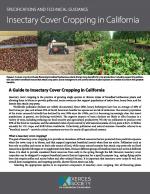
Insectary cover cropping is the practice of growing single species or diverse mixes of broadleaf herbaceous plants and allowing them to bloom to provide pollen and nectar resources that support populations of native bees, honey bees, and the insects that attack crop pests.
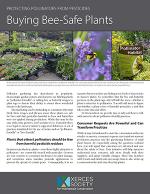
Creating a welcoming home for local pollinators in your home garden or city park habitat is reason enough to choose plants free from harmful pesticide residues. Nurseries are more likely to make investments in pollinator-friendly production if their customers make it clear this is what they want. Our guide, Buying Bee-Safe Plants, covers four ways to help you find plants that are safe for bees, and includes tips and questions to use at the nursery.
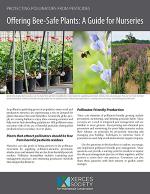
Three core elements of pollinator-friendly growing include using non-chemical methods to prevent and manage pests, monitoring of pest pressure, and limiting risk to pollinators if pesticides are used. These concepts are rooted in integrated pest management and are familiar to most growers. Offering Bee-Safe Nursery Plants: A Guide for Nurseries explains these concepts further and was created for wholesalers and retailers to explore, encourage, and implement pollinator friendly pest-management in the nursery business.
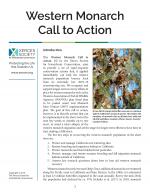
Western monarchs need everyone’s help. Starting in 2018, monarch butterflies had tough seasons in their migratory and breeding grounds in the western states and, in the following two winters, the annual Xerces Western Monarch Thanksgiving Count showed that the population hit a new low: In both 2018 and 2019, volunteers counted under 30,000 monarchs—less than 1% of the population’s historic size.
This Western Monarch Call to Action, led by the Xerces Society for Invertebrate Conservation, aims to provide a set of rapid-response conservation actions that, if applied immediately, can help the western monarch population bounce back from its critically low overwintering size.
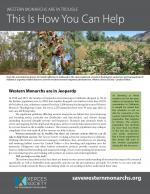
In 2018 and 2019, the number of monarchs overwintering in California dropped to 1% of the historic population size. In 2020, that number dropped even further to less than 0.01% of the historic size, volunteers counted less than 2,000 monarchs during the annual Western Monarch Thanksgiving Count. For every 2,250 monarchs there were 30 years ago, there is only one left flying today.
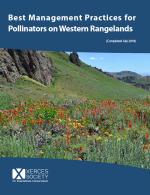
To help land managers incorporate pollinator-friendly practices into rangeland management, the Xerces Society for Invertebrate Conservation developed Best Management Practices for Pollinators on Western Rangelands. These guidelines were developed for federally managed rangelands that span the eleven western United States: Arizona, California, Colorado, Idaho, Montana, New Mexico, Nevada, Utah, Oregon, Washington, and Wyoming.
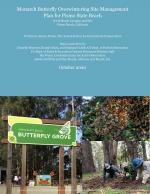
North Beach Campground Site, Pismo Beach, California
Pismo State Beach butterfly grove has been ranked as the most important out of more than 100 California overwintering sites. To help ensure that Pismo Beach continues to provide high quality habitat for monarchs, this site management plan offers recommended actions to support overwintering monarchs in both the short and long term.
Essays on Invertebrate Conservation
Forests and woodlands are valued worldwide for their environmental benefits and economic products. In this issue we explore three very different forest environments and the insects they support: old-growth coniferous forests in the Pacific Northwest, eastern broadleaf forests in New Jersey, and ancient woodlands in England.
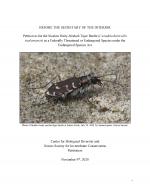
The Center for Biological Diversity and the Xerces Society for Invertebrate Conservation filed a petition seeking Endangered Species Act protection for the imperiled Siuslaw hairy-necked tiger beetle.
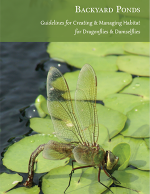
Guidelines for Creating & Managing Habitat for Dragonflies and Damselflies
These guidelines provide information for homeowners and other landowners about the creation, management, and maintenance of backyard ponds to attract native wildlife, with an emphasis on attracting dragonflies and damselflies. By creating aquatic resources for dragonflies and damselflies in their own backyards, homeowners will be rewarded by views of visiting wildlife and will realize the ecological benefits of creating essential aquatic habitat that may be lacking or degraded in many urban landscapes.


